Blog
Seasonal Affective Disorder vs. Winter Blues: What’s the Difference?

Quick Summary: Seasonal affective disorder (SAD) is a form of depression that affects mood, energy, sleep, and everyday routine. It can be easy to miss in older adults. In this guide, The Legacy explains the difference between seasonal affective disorder and winter blues, symptoms of seasonal affective disorder to watch for, how to start a caring conversation, and which seasonal affective disorder treatments and everyday habits are most helpful.
Disclaimer: This article is meant to help families understand the differences and is not intended as a diagnostic tool for SAD or depression. Consult with a healthcare provider if you have concerns about a loved one’s mood, sleep, energy, or behavior.
Your mother used to look forward to Thursday dinner with her friends. Lately, she’s been skipping it. By the time it ends, it’s already dark outside, and staying in feels easier. Or maybe it’s your husband, who is sleeping later, barely touching his dinner, and telling you, “I’m fine. It’s just the winter blues.”
If you’re an adult child or a spouse, moments like these can leave you wondering: Is this a normal winter slump, or is something more going on?
It’s a fair question, and a common one. At The Legacy Senior Communities, we know how difficult it can be to understand whether a change in someone you love is simply temporary or requires a little more attention. In this blog, we’re sharing helpful guidance and information to help families understand the difference between seasonal affective disorder (SAD) vs. winter blues, how to recognize changes worth noticing, and how to start the conversation without making your loved one feel judged.
Seasonal Affective Disorder vs. Winter Blues: How Can You Tell the Difference?
Mild shifts in mood or energy are common during colder, darker months. But seasonal affective disorder is something different.
Seasonal affective disorder, or SAD, is a type of depression that follows a seasonal pattern, beginning and ending at the same times each year, according to the Mayo Clinic. For many people, symptoms begin in late fall or winter and ease as spring and summer return, a pattern that is referred to as winter-onset SAD or winter depression. This is often called winter-pattern SAD.
Some people experience symptoms in spring or summer instead, but this is less common according to the National Alliance on Mental Illness (NAMI). Unlike a case of the winter blues, seasonal affective disorder is a recurring pattern that can affect a person’s ability to function and socialize with others.
Here’s a quick seasonal affective disorder vs. winter blues table to understand the difference easily.
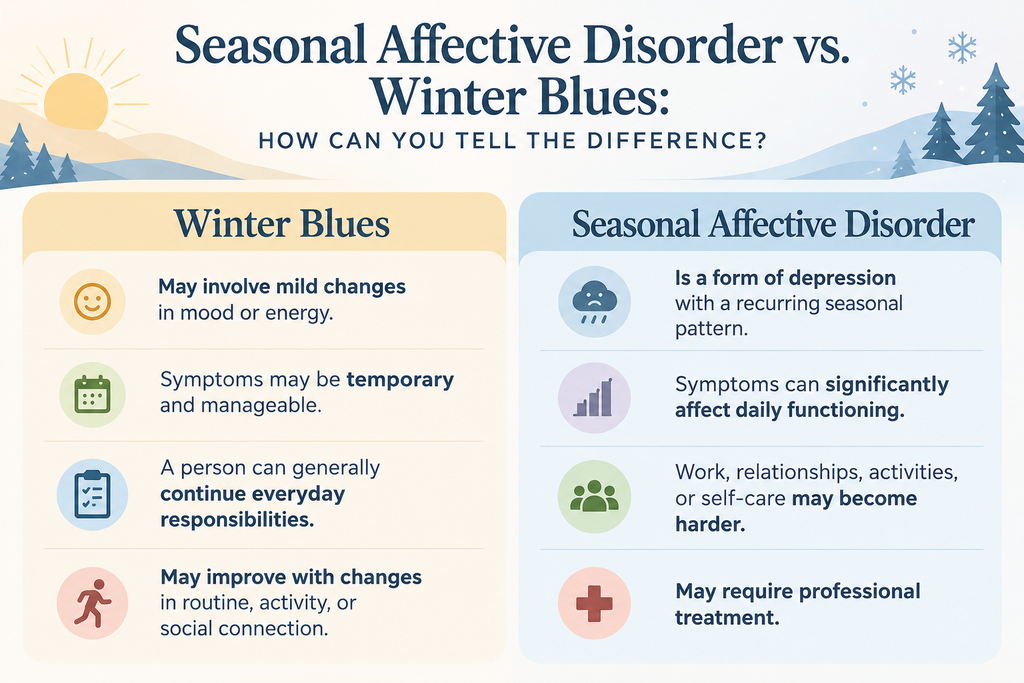
The National Institute of Mental Health (NIMH) suggests paying attention to two important factors: how severe the symptoms are and how much they affect everyday life.
Mild symptoms that last less than two weeks may improve with supportive habits. Symptoms that persist, worsen, or begin interfering with daily routines are worth discussing with a healthcare provider.
According to NIMH, symptoms generally need to return around the same time of year for at least two years before SAD is diagnosed. So if you’ve noticed that Mom or Dad is falling into the same slump as the previous winter, talk to their healthcare provider about this trend.
What Causes Winter SAD?
Researchers don’t yet know exactly what causes SAD, but changes in daylight appear to play an important role.
According to the Mayo Clinic, shorter winter days can affect the body’s internal clock, which guides our sleep-wake cycle. Seasonal changes may also affect serotonin, a brain chemical involved in mood, and melatonin, a hormone that helps regulate sleep.
Together, these shifts may help explain why some people feel different in mood, energy, and sleep as the seasons change.
Symptoms of Seasonal Affective Disorder
Older adults may not explicitly say how they feel; however, there are clues that may suggest they are experiencing SAD. Some common symptoms of seasonal affective disorder include:
- Persistent sadness, anxiety, or an “empty” mood
- Loss of interest in activities they once enjoyed
- Low energy or fatigue
- Difficulty concentrating or making decisions
- Feelings of hopelessness, guilt, or worthlessness
- Changes in sleep or appetite
- Withdrawal from other people
Additionally, Mayo Clinic notes that Individuals experiencing winter SAD, may also oversleep, eat more, crave carbohydrates, and gain weight.
It can help to notice changes in routine as well as mood. You might ask yourself:
- Has my parent stopped going to activities they usually enjoy?
- Are they spending more time alone than usual?
- Has their sleep routine changed?
- Do these changes seem to return around the same time each year?
When to reach out right away: If your loved one talks about death or suicide, expresses hopelessness, or seems unable to care for themselves, don’t wait for the season to pass. Contact their doctor promptly. If you’re worried about their immediate safety, call or text 988 (the Suicide & Crisis Lifeline) or call 911.
Why Seasonal Affective Disorder Is Easy to Miss in Older Adults
Seasonal affective disorder can be easy to overlook in older adults. Changes in mood, energy, sleep, or everyday routines may be subtle at first, or they may seem like they’re connected to something else. Here are a few reasons SAD may go unnoticed:
- SAD is less common in older adults, so families don’t expect it: SAD often begins in young adulthood, and women are diagnosed more often than men. That doesn’t mean older adults are immune. It can develop or continue later in life, especially for people with a history of depression or bipolar disorder, or a close relative with SAD or another form of depression.
- Other things can look like SAD: Medical conditions, medications, pain, grief, and other forms of depression can cause some of the same changes. Additionally, instances of depression may be misinterpreted as signs of cognitive decline or normal aging, according to University of Michigan Health. That’s why it helps to look at the pattern (does it persist, interfere with daily life, or return each year?) rather than assume a cause.
- Winter quietly changes an older adult’s routine. Shorter days, colder weather, and mobility or transportation challenges can make it harder to get outside. Over time, someone may simply be spending more time at home. These changes don’t necessarily cause SAD, but they can make it harder to keep up the things that support well-being: movement, daylight, connection, and activities that bring joy or purpose.
- We may not think of it in Texas. SAD is reported more often in places farther from the equator, such as Alaska and New England, than in Texas or Florida, according to NIMH. But that doesn’t mean someone in Dallas or Plano can’t experience it. Less sun and outdoor activity during Texas winters may also lead to SAD, according to Texas Health. If changes in mood, sleep, energy, or interest seem to return with the seasons, they’re still worth noticing.
How to Start the Conversation With Someone You Love
Knowing something might be wrong is one thing. Bringing it up is another. Many older adults worry about being a burden, or feel uncomfortable talking about their mood. These few approaches can help:
- Choose a calm, unhurried moment. A quiet cup of coffee in the morning light usually goes better than a conversation squeezed in at the end of a busy visit.
- Start with what you’ve noticed, not a diagnosis. “I’ve noticed you haven’t been to book group lately, and I miss hearing about it” feels very different from “I think you’re depressed.”
- Ask, then listen. Let them answer in their own words, even if it’s short, or if they brush it off the first time. You can come back to it.
- Skip the quick fixes. Phrases like “just get outside more” or “cheer up” can make someone feel unheard.
- Offer a concrete next step. “Would you like me to set up an appointment with Dr. Smith and drive you?” is easier to say yes to than “you should see someone.”
- Note physical symptoms as well. Some people find it easier to talk about sleep, energy, or appetite than about mood. Take note of these things so you can share them at their next doctor’s appointment.
Tips on How to Beat the Winter Blues for Seniors
If your loved one is experiencing mild seasonal mood changes that don’t seem to be a recurring pattern, there are still ways to help make fall and winter feel more manageable. In Texas, that often means making the most of the weather you have.
- Maximize daylight hours. Open curtains and blinds during the day, sit near a bright window, and plan outdoor time for the sunniest part of the day, when weather, health, and mobility allow. A short walk on a mild winter afternoon can go a long way.
- Keep a consistent sleep routine. Try to keep bedtime and waking time fairly regular. Steady sleep patterns can support the body’s internal clock, especially when daylight hours change.
- Keep moving. Depending on someone’s abilities and health, that might mean walking, stretching, an exercise class, swimming, or another form of movement they enjoy. Indoor options help on the gray or chilly days.
- Stay connected. A weekly lunch, religious service, exercise class, book group, phone call, or visit with family gives the week structure and something to look forward to. Daytime social plans can be easier to keep once the sun sets early.
Seasonal Affective Disorder Treatments
If symptoms persist, worsen, or begin to interfere with everyday life, it’s time to talk with a healthcare professional. Based on the symptoms and their severity, there are several seasonal affective disorder treatment options.
Light Therapy
Light therapy, sometimes called phototherapy, is often used for winter-pattern SAD. It involves sitting near a specially designed bright-light box, usually in the morning for about 30-45 minutes, to make up for reduced daylight in fall and winter. Speak with a healthcare provider before starting. The Mayo Clinic recommends extra caution for people with certain eye conditions, people taking medications that increase sensitivity to light, and people with bipolar disorder.
Talk Therapy
Talk therapy may also help. One approach, cognitive behavioral therapy for SAD (CBT-SAD), focuses on identifying unhelpful thought patterns, managing stress, and making room for activities that feel meaningful or enjoyable. For someone who tends to withdraw or lose motivation during winter, it can help build routines and coping strategies that feel manageable.
Medication
Some people with SAD may benefit from antidepressant medication, especially when symptoms are more severe or return year after year. However, medication isn’t the right option for everyone. It should be discussed with a healthcare professional who can consider symptoms, medical history, and other medications.
Vitamin D
Vitamin D has been studied in relation to winter SAD, but the evidence is still mixed. While vitamin D production is connected to sunlight exposure, studies on vitamin D supplements as a treatment for SAD symptoms have found no significant therapeutic benefits. Because supplements may interact with certain medications, talk with a healthcare provider before using vitamin D for seasonal depression.
Staying Connected and Engaged Through Winter at The Legacy
Winter may bring shorter days and cooler weather, but it doesn’t have to mean putting the things you enjoy on hold. Opportunities to stay active, connect with others, and spend time on something meaningful can make it easier to keep a fulfilling routine all season.
At The Legacy Midtown Park in Dallas and The Legacy Willow Bend in Plano, residents have plenty of ways to stay engaged year-round. Fitness and wellness programs, heated indoor pools, art and creative activities, lectures, social gatherings, cultural outings, and special events offer different ways to move, learn, connect, or simply enjoy the day. When activities are close at hand, a chilly morning or an early sunset doesn’t have to mean a quiet day at home.
That’s really what community life at The Legacy is about: having choices close at hand and the freedom to spend your time in ways that feel right for you. If you’re exploring what that could look like for you or someone you love,schedule a tour to discover programs, amenities, and connections that make every season meaningful.
Frequently Asked Questions
Q. What is winter SAD?
A. Winter SAD, or winter-pattern seasonal affective disorder, is a form of depression in which symptoms typically begin in late fall or early winter and improve during spring or summer. Common symptoms of seasonal affective disorder may include low energy, oversleeping, increased appetite, carbohydrate cravings, weight gain, and social withdrawal.
Q. Does seasonal affective disorder get worse with age?
A. Not necessarily. SAD can affect older adults, but research generally finds that it occurs more frequently in younger adults than older adults. Regardless of age, recurring seasonal changes in mood, sleep, energy, or daily functioning are worth discussing with a healthcare professional.
Q. How can seniors beat the winter blues?
A. For mild seasonal mood changes, spending time in daylight, maintaining regular sleep and activity routines, doing enjoyable activities, and staying connected with family and friends may help. If symptoms persist, worsen, or begin interfering with everyday life, talk with a healthcare professional rather than assuming it is simply the winter blues.