Blog
What to Expect With Hospice Care at Home

Quick Summary: Hospice care at home brings medical, emotional, and spiritual support directly to your loved one’s side for highly personalized care centered around their comfort and individual needs. This guide from The Legacy at Home explains what to expect with hospice care at home, how the care team supports family caregivers, and how many families pay for hospice care.
Starting Hospice care at home is a very difficult time, even though you know it’s the right choice for someone you love. Alongside the weighty emotions that come with the decision are the everyday questions that need answers: Who will come to the house? What is the family responsible for vs. the caregiver? What happens if there is a change in my loved one’s status?
Having answers to those questions can bring some clarity and peace to an uncertain time. Hospice care focuses on comfort and quality of life, helping your loved one remain in familiar surroundings while giving your family guidance and support along the way.
At The Legacy at Home, we’ve supported patients and families across Texas through this deeply personal time. We created this guide to help you understand what end-of-life care at home actually looks like—from the first visits and your role as a caregiver to the support available for your loved one and your family.
What Does Hospice Care at Home Actually Look Like?
Hospice care at home may seem quieter and more familiar than you imagine. Your loved one can remain in a place they know, surrounded by familiar faces and belongings, while receiving care focused on keeping them comfortable.
And, you don’t suddenly have to figure everything out on your own. Hospice is a team approach. Nurses, doctors, social workers, chaplains, and other professionals work together around your loved one’s needs and wishes.
Depending on the care plan, hospice support may include:
- Emotional and spiritual support for both your loved one and family
- Education and guidance for caregivers so you know how to provide care between visits and when to reach out for help
- Pain and symptom management to help keep your loved one as comfortable as possible
- Alternative therapies
- Grief and bereavement support for family members
- Medications, medical equipment, and supplies related to hospice care
- Grief and bereavement support for family members
At The Legacy at Home, our hospice services are expressly tailored to the individual’s needs and wishes, rather than following a one-size-fits-all approach.
It’s also helpful to know that routine hospice care at home doesn’t necessarily mean a healthcare professional will be at the bedside around the clock. Family members may still be closely involved in day-to-day care.
What to Expect When Hospice Care at Home Begins
No two families will have the same hospice care experience. Your loved one’s health, preferences, symptoms, and family circumstances will shape their care. Still, knowing some of the things that may happen when hospice care at home begins can help you prepare:
You’ll Meet the People Supporting Your Family
Hospice care brings together professionals across different areas of expertise. For instance, at The Legacy at Home, we have a team of experts such as doctors, nurses, social workers, and chaplains who work together to create and carry out a personalized care plan. Depending on your loved one’s needs, we may also involve other professionals, aides, or volunteers.
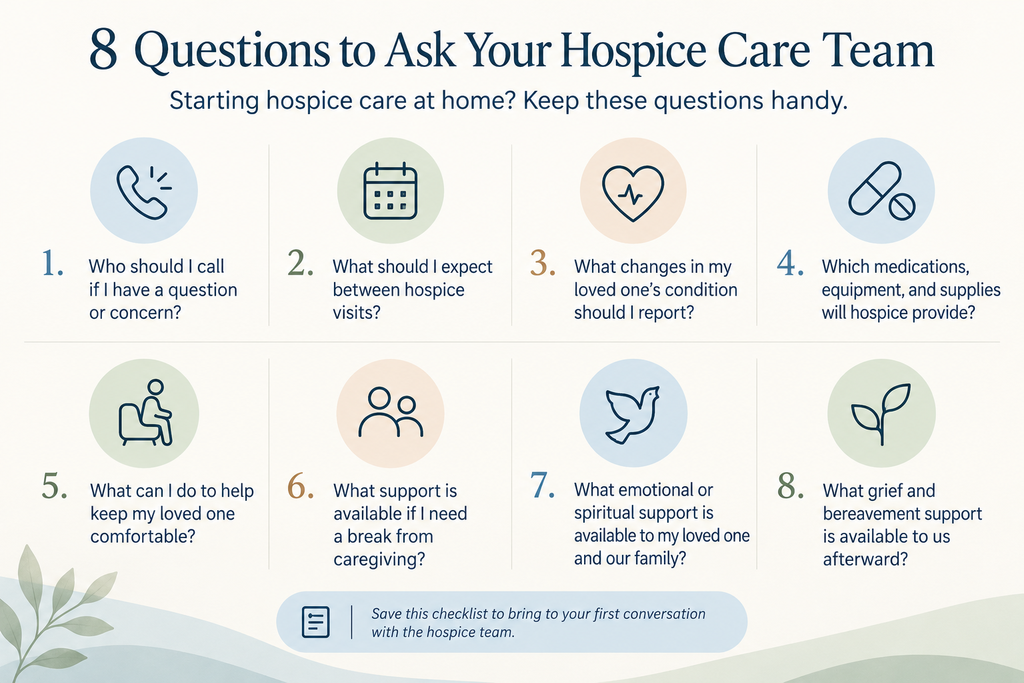
For caregivers, knowing there’s a team you can turn to can bring some reassurance. Whether you have a question about your loved one’s care or simply need emotional or spiritual support, you’ll have someone to turn to. When you meet the team, ask who your main point of contact will be and who you can call when questions come up.
They’ll Create a Personalized Care Plan
The hospice care team will include your loved one’s symptoms, comfort, preferences, emotional needs, and wishes when developing their unique care plan.
For your family, this is an opportunity to talk openly about what matters most to your loved one. That may include where they want to receive care, who they want nearby, and whether there are familiar traditions or spiritual practices they want to continue.
As a Jewish-sponsored organization, we have a particular understanding of Jewish traditions surrounding end-of-life care, while welcoming people of all spiritual beliefs. The Legacy is accredited by the National Institute for Jewish Hospice, meaning that our staff and volunteers are trained in the full spectrum of Jewish traditions, beliefs, and customs associated with death and mourning.
Rabbi Holly Cohn, a full-time chaplain and ordained rabbi with The Legacy at Home, explains:
“I am a full-time chaplain and ordained rabbi, so I am able to say the traditional Jewish blessings—the Vidui, the confessional prayer, and the Shema—that are said before dying,” says Rabbi Cohn.
“I have the skills, background, and education to serve our Jewish patients and to thoroughly train our staff about our customs; I am able to explain to them what emotions the patient might be feeling and what might be weighing on them at certain times, like during Yom Kipper, when they may be feeling down or reminiscing.”
For more on how Jewish hospice care can provide connection and comfort during life’s final stage, read our blog on The Jewish Hospice Difference.
Our hospice care also offers spiritual support that includes familiar prayers, hymns in Hebrew or English, and access to streamed High Holiday and weekly Shabbat services. If your loved one is someone who finds comfort in their faith, having such traditions as part of their hospice care at home can be deeply meaningful.
If you have questions about specific faith traditions that may bring your loved one peace during this time, feel free to reach out to our team with questions.
Your Home May Start to Look a Little Different
As hospice begins, you may notice practical changes around the house. Medical equipment, medications, and supplies may arrive to make everyday care safer and more comfortable for your loved one.
A hospital bed in the bedroom or medical supplies on the nightstand can take some getting used to. But each addition has a purpose: to support comfort and make caring for your loved one at home a little easier.
When equipment or supplies arrive, ask the hospice team to walk you through them. Find out what each item is for, where you should store the medications, and any care tasks you may need to manage between visits.
You’ll Learn How to Help Between Visits
As hospice care settles into a routine, the care team will help you understand how to care for your loved one before they make their next visit. The team can help provide education and guidance on managing medications, keeping your loved one comfortable, symptoms to watch for, and the process for notifying them of changes in your loved one’s condition.
The goal is to help you feel more informed and confident in your role as a caregiver, while making sure your loved one feels comforted and supported, even when the team is not there.
Hospice Support Is for Families, Too
When someone you love begins hospice care at home, it’s natural to focus only on their needs. It’s important to remember that family grief and bereavement support is part of the services they offer, too.
As part of their training and experience, the hospice team is intimately familiar with what family members experience during this time, and they are willing and able to care for the caregivers along the way.
Depending on your family’s needs, that support may include:
- Practical guidance: Help with understanding the care plan and your role in your loved one’s day-to-day care.
- Emotional and spiritual support: A trusted person to talk with as you process the emotions that may come with this time.
- Respite care: An opportunity for caregivers to rest and recharge while their loved one continues to receive care.
- Bereavement support: Support that continues after a loved one’s passing. The Legacy’s Jewish hospice program offers bereavement counseling and family outreach for 13 months following a patient’s death.
Even though paying for hospice care may be the last thing on your mind, the hospice care team can help you navigate the financial aspects as well.
Families often use Medicare Part A benefits, which cover hospice care for eligible individuals. Additionally, The Legacy’s hospice care services are also covered by Medicare, Medicaid, private insurance plans with a hospice benefit, or private pay.
Understanding your coverage early can take one worry off your family’s plate, says Jessica Haecker, executive director of The Legacy at Home
”Having the cost covered gives many families and patients the extra peace of mind they need during a difficult time.”
Finding the Right Support for Your Family
There’s no perfect way to prepare for this chapter, and new questions may come up as your loved one’s needs change. Having a care team you trust can give you more space to focus on what matters most: spending meaningful time with the person you love.
At The Legacy at Home, we understand how personal this experience is for every family. Our team is here to listen, answer your questions, and help you focus on what matters most: being present with the person you love.
If you’re considering hospice care at home in Dallas and Plano, TX, reach out to our team anytime to talk with us about what the next steps may look like for your family. We’re always willing to answer questions, help guide you, or just provide a listening ear.
Frequently Asked Questions
Q: What are the different levels of hospice care?
A: There are four levels of hospice care based on the needs of the individual:
- Routine home care: Care provided by your family and/or loved ones at home. A specialized hospice care provider, such as The Legacy, makes routine visits.
- General inpatient (GIP) care: An individual receives care outside the home because their pain or other symptoms cannot be managed properly at home.
- Continuous home care: An individual receives more intensive support for a short time to manage a symptom crisis. This care is often given for individuals that may qualify for GIP care but wish to remain at home.
- Respite care: An individual receives care outside the home for a short-term period so their caregivers can get the rest they need.
Your hospice care team can help your family determine the appropriate level of care based on your loved one’s needs.
Q: Does hospice at home mean someone will be there 24-hours a day?
A: Routine hospice care at home doesn’t usually require a hospice professional staying by an individual’s bedside 24 hours a day. In most cases, the hospice care team makes scheduled visits and supports caregivers and family members according to the care plan. During periods of crisis, defined as at least eight hours of care within a 24-hour period, a patient may qualify for continuous home care and receive more frequent intensive support to help manage their symptoms.
Q: What services are typically included in hospice at home?
A: Hospice care at home may include services such as:
Depending on the care plan, hospice support may include:
- Emotional and spiritual support for both your loved one and family
- Education and guidance for caregivers so you know how to provide care between visits and when to reach out for help
- Pain and symptom management to help keep your loved one as comfortable as possible
- Alternative therapies
- Grief and bereavement support for family members
- Personal care assistance with everyday needs
- Medications, medical equipment, and supplies related to hospice care
- Emotional and spiritual support for both your loved one and family
- Education and guidance for caregivers so you know how to provide care between visits and when to reach out for help
- Grief and bereavement support for family members
At The Legacy at Home, our hospice services are expressly tailored to the individual’s needs and wishes, rather than following a one-size-fits-all approach.